
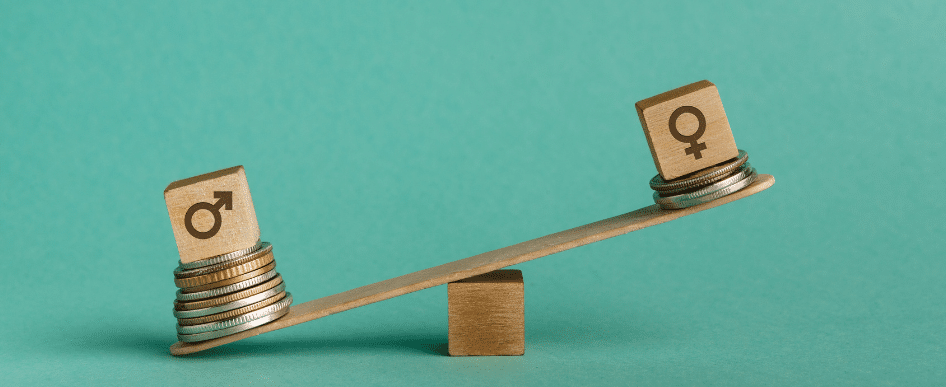
Every year, UK companies with 250 or more employees are legally required to publish their gender pay gap data. Defined simply, the gender pay gap is the percentage difference between the average gross hourly earnings of men and women across an entire organisation.
While the UK’s national median gender pay gap has steadily improved, falling to 6.9%, the technology sector is moving in the wrong direction. Recent data shows that the median gender pay gap for UK IT professionals has widened sharply to 17.6%, marking a nine-year high.
Despite decades of awareness, the “frustratingly slow” progress has officially reversed. If we want to turn the tide, we have to understand exactly why this gap is expanding and take intentional, modern steps to dismantle it.
Important Clarification: The gender pay gap is not the same as unequal pay. Paying a woman less than a man for the exact same job has been illegal since the Equal Pay Act of 1970. Instead, the tech pay gap exists because men heavily dominate the highest-paying technical and executive roles, while women are disproportionately concentrated in entry-level, non-technical, or administrative positions.
The widening of the gap is largely a result of structural changes in the industry over the last few years:
We cannot fix a structural problem with superficial fixes. Closing the 17.6% gap requires tech companies to target three key levers: recruitment, internal progression, and retention.
1. Re-engineer technical recruitment
If your pipeline is exclusively male, your output will be too.
2. Democratise progression and upskilling
The gap exists because women get stuck in mid-level individual contributor (IC) roles or non-technical paths.
3. Protect and evolve flexible working
The post-pandemic push to force workers back into central offices full-time is disproportionately harming women, who still bear an unequal share of domestic and caregiving responsibilities.
Mandatory reporting was designed to spark self-reflection, but transparency without action is just public relations. Tech companies must treat their gender pay gap metrics with the exact same rigour they apply to their quarterly revenue targets.
Until tech leaders look at a 17.6% pay disparity as a critical operational failure, rather than an inevitable industry quirk, the gap will continue to grow. True progress will only be achieved when we actively build an industry where women aren’t just invited into the room, but are systematically supported, promoted, and paid to lead it.