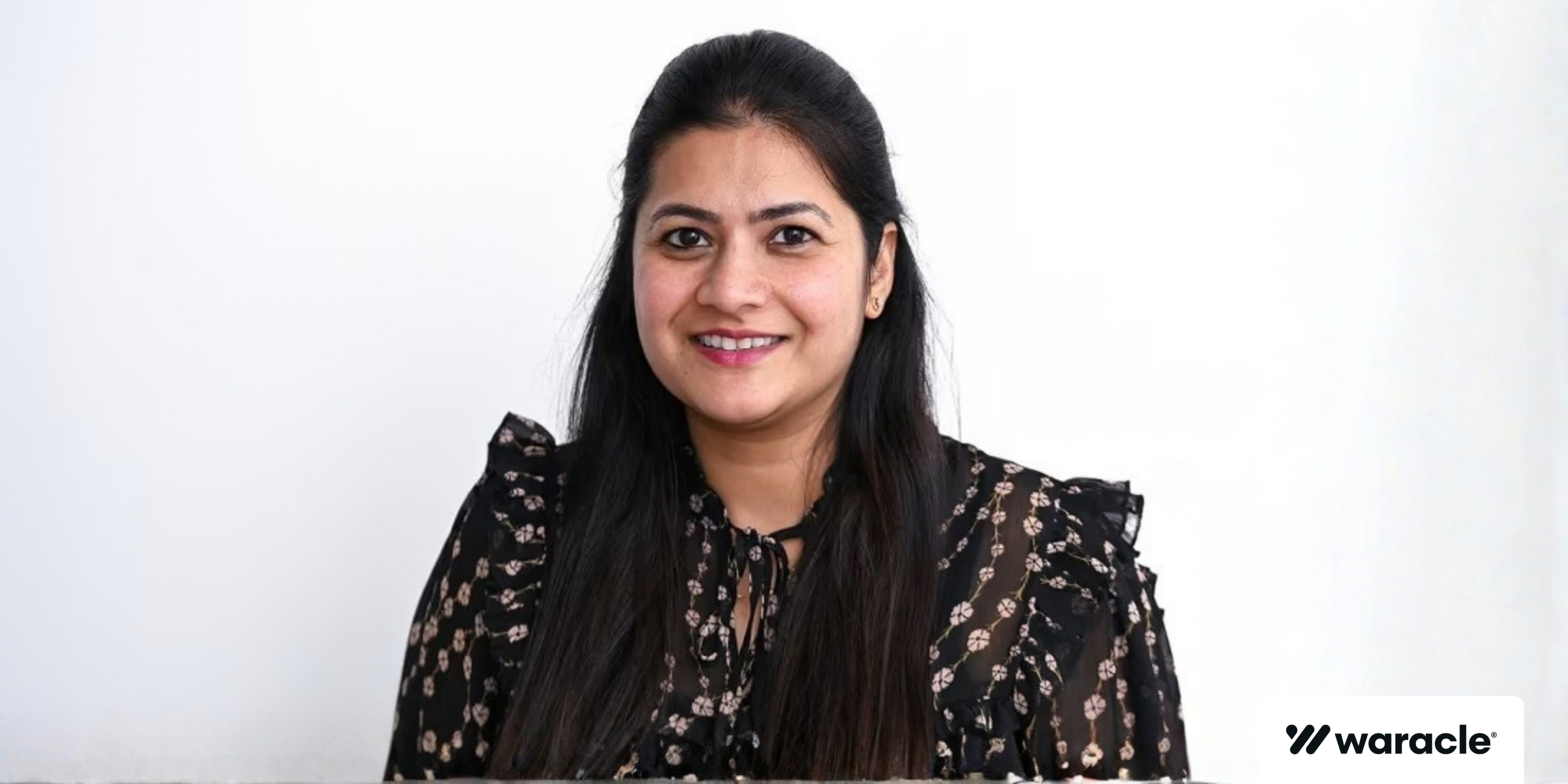
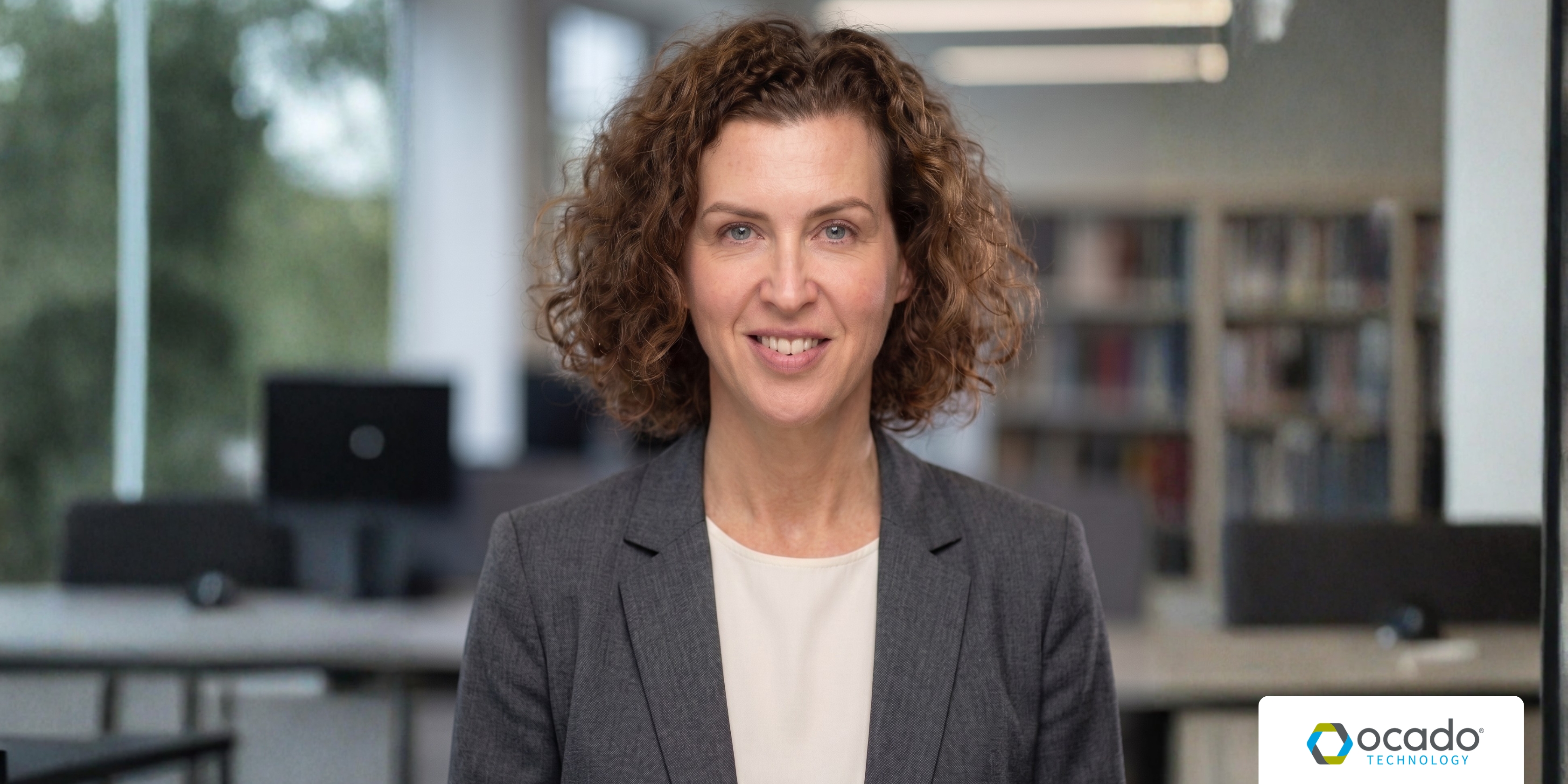
Navigating a career that jumps across e-commerce, consumer packaged goods (CPG), telecommunications, and high-tech retail requires a rare kind of professional agility. Few executive leaders master this shifting landscape quite like Toni Radzihovska, Vice President of Product for Supply Chain Management at Ocado Technology. With a rich leadership background that features pivotal roles at global giants like Amazon Alexa and AB InBev, alongside time launching her own startups, Toni has spent more than two decades scaling products and driving digital innovation. Whether leading multi-billion-dollar corporate divisions or steering agile, high-growth teams, her focus remains unshakeable: building technology that transforms massive operational complexity into seamless business value.
One of the biggest influences was actually my parents. They both studied what we would now call computer science back in the late 70s and early 80s, although at the time it was called engineering.
Growing up in the Soviet Union, technology still felt rare and almost magical, but somehow my parents managed to bring it into our home – I still remember our old IBM 386 computer and playing what would now look like a hilariously primitive game. What stayed with me wasn’t really the machine itself — it was the sense that technology could open doors and connect people to a much bigger world. Especially when I spent a year in the US as a teenager. Back then, staying connected with family abroad was difficult and slow. Suddenly, email meant I could send a message to my parents and hear back the same day instead of waiting weeks for a letter. It sounds simple now, but at the time, it felt transformational.
I think that experience shaped how I’ve approached technology throughout my career. I’ve never been excited by technology purely for the sake of it. What motivates me is the human side of innovation — how technology can solve real problems, remove friction, save people time, or create entirely new experiences.
Yes, I think one of the defining moments in my career happened surprisingly early, during my time at Kyivstar, one of the largest telecommunications companies in Ukraine. What made a huge difference was that I had leaders around me who looked beyond my age and experience level. They saw ambition, curiosity, and an ability to execute, and they gave me the opportunity to lead a major new product launch far earlier than I probably should have!
At the time, we didn’t fully realise how significant the project would become. What started as an experiment grew into a major commercial success for the business and eventually became one of the defining experiences of my career.
That experience taught me something I’ve carried throughout my career: successful innovation is rarely just about the technology itself. It’s about understanding how technology, customer behaviour, operations, commercial models, and execution all work together as a system to generate outcomes for your customers and your business.
One of the biggest lessons actually came from founding and bootstrapping my own businesses.
Entrepreneurship teaches you humility very quickly. In a large company, it’s easy to assume success comes purely from your own capabilities, but when you build something from scratch, you realise how much trust, reputation, and brand matter. You learn that nobody owes you attention — you have to earn it. That experience made me a much more empathetic leader. It also made me more practical and outcome-focused, because in startups, there’s no room for complexity for the sake of complexity.
Managing multicultural teams across different countries added another important dimension. Over time, I realised there is no single “correct” leadership style. The best leaders adapt to the people and environment around them. For example, as an Eastern European myself, I’m used to very direct communication styles, and many of the teams I’ve worked with in that region appreciate clarity and candour. But when I led people in Japan during my time at Amazon Alexa, I had to approach communication and decision-making very differently. Building trust there required more context, patience, and sensitivity to context. I think the key is balancing adaptability with authenticity. You need enough self-awareness and humility to listen, learn, and adjust your approach without losing clarity or direction as a leader.
Interestingly, despite spending most of my career in technology, I actually tend to put technology third in the decision-making process. I start with the customer problem first. One of the frameworks that strongly influenced me during my time at Amazon was the PRFAQ process — essentially starting with the future customer press release and working backwards from the customer needs. The discipline of that approach is incredibly powerful because it forces teams to ask very basic but important questions:
If there isn’t a genuine customer need, it becomes very difficult to create meaningful commercial value, no matter how sophisticated the technology is. The second consideration for me is commercial impact. Even great customer experiences need a sustainable business model behind them. Part of leadership is understanding where investment creates real long-term value versus where teams may be building something interesting but commercially unnecessary. Only then do I focus on the technology itself — not because technology is unimportant, but because technology is ultimately an enabler rather than the goal. In practice, that sometimes means the best solution is not purely technical. At Ocado, for example, there were situations where clients initially believed they needed a new technical solution, but the real opportunity was improving operational processes. Sometimes changing the operating model unlocks more value than building another feature.
A large part of my day-to-day role at Ocado is helping teams and leaders navigate trade-offs. At this level, leadership becomes much less about personally building products and much more about creating clarity around priorities, direction, and outcomes.
My role is often to help teams answer questions like:
Because we operate at a significant scale across multiple international retailers, the decisions are rarely isolated. A change in one part of the platform can affect commercial outcomes, operational efficiency, customer experience, or engineering complexity somewhere else.
A lot of my time is spent bringing together perspectives from Product, Engineering, Data, UX, and Commercial teams to make informed decisions in environments where there is never perfect information. I think one of the biggest misconceptions about leadership is that senior leaders always have certainty. In reality, many decisions have to be made with incomplete data and competing viewpoints.
Part of the role is being able to listen carefully, absorb context quickly, and then still be decisive. Right now, many of the opportunities we are focused on at Ocado sit at the intersection of e-commerce, operational efficiency, and AI. That includes improving customer acquisition and retention, helping retailers personalise experiences more effectively, and using technology to simplify increasingly complex operations behind the scenes.
What excites me most about Ocado is that it’s one of the rare genuine British technology success stories that has scaled globally. It started as an online grocery retailer, but over time it evolved into a sophisticated technology and logistics platform used by retailers around the world. That combination of deep technology, operational complexity, and real-world impact is incredibly compelling to me.
I am also fascinated by the grocery industry itself because it is such a difficult problem space. Grocery retail operates on extremely thin margins, demand is highly variable, products are perishable, and fulfilment at scale is operationally complex. Managing tens of thousands of SKUs while balancing availability, waste reduction, customer satisfaction, labour efficiency, and delivery speed is an enormous systems challenge. What makes Ocado stand out is that technology is not abstract — it directly influences physical outcomes in the real world. The work we do affects how food moves through supply chains, how efficiently warehouses operate, how accurately customer demand is predicted, and ultimately how groceries arrive at someone’s doorstep.
I think that intersection between software, AI, robotics, logistics, and customer experience is incredibly unique. Many technology companies operate purely in digital environments, whereas at Ocado you can see the tangible impact of innovation across the entire ecosystem.
I think there are still several persistent challenges for women in technology, even though the industry has undoubtedly made progress.
One challenge is perception and credibility. Many women in tech have experienced situations where their expertise is underestimated before they have even spoken. There are countless stories of highly senior female engineers or data scientists being mistaken for assistants simply because people unconsciously associate technical authority with men. I’ve had experiences myself where I was the only woman in the room, and that inevitably changes the dynamics of how you are perceived and how you participate.
There’s also a difficult balance around leadership style. Women are often not socialised to behave in highly aggressive or confrontational ways, but when they do adopt those behaviours — especially in traditionally male-dominated environments — the reaction can be disproportionately negative. So many women end up navigating a very narrow space between being perceived as “too soft” or “too difficult,” which can be exhausting.
Another challenge is structural rather than cultural. Even today, many workplaces are still not designed around the realities of caregiving responsibilities, which disproportionately affect women. Flexibility has improved significantly, especially post-pandemic, but there is still a gap in understanding. Well-meaning colleagues who haven’t personally experienced those pressures sometimes underestimate how important flexibility, trust, and support systems are for enabling long-term career growth.
I also don’t fully agree with the argument that the lack of women in senior technology leadership is simply a “pipeline problem.” Yes, fewer women may initially enter some technical fields, but when you look at progression rates, representation often declines disproportionately at each seniority level. That suggests there are still systemic issues around sponsorship, promotion, visibility, and how leadership potential is evaluated.
One piece of advice I would give to women early in their careers is to recognise that some of the barriers they encounter are real — and that not every setback should automatically be internalised as personal failure.
There are still structural and cultural biases in parts of the technology industry, and acknowledging that can actually be empowering. Sometimes you may not get the role, the promotion, or the opportunity for reasons that are more complex than simply “not being good enough.” Of course, there is always room to learn and grow professionally, but I think many women place an enormous amount of pressure on themselves to constantly overperform in order to prove they belong.
What’s important is not letting those experiences diminish your confidence or curiosity. At the same time, I genuinely believe the industry needs more diverse voices in leadership — not simply for representation, but because technology shapes how people live, work, communicate, and make decisions. If the people designing products all come from similar backgrounds and experiences, we risk building technology that reflects only a narrow view of the world. That’s one of the reasons I’ve become increasingly involved in mentorship and Women in Technology initiatives at Ocado. I care deeply about creating environments where people feel supported to grow, experiment, and lead without feeling they have to fundamentally change who they are in order to succeed.
I am always slightly cautious about making very specific predictions about technology because the industry evolves so quickly, and history is full of confident forecasts that turned out to be completely wrong.
One idea that has stayed with me from my time at Amazon was Jeff Bezos’ observation that people spend a lot of time focusing on what will change, but not enough time thinking about what will stay the same. I think that’s a very useful lens for thinking about the future of AI, automation, and commerce. Yes, the technologies themselves will evolve dramatically.
AI will almost certainly automate more repetitive cognitive work, accelerate scientific discovery, personalise customer experiences, and change how people interact with software and information. Automation will continue transforming logistics, supply chains, healthcare, and many operational industries. But the underlying human needs are remarkably consistent. People will still want trust, safety, convenience, connection, meaning, and optimism about the future for themselves and their families. The companies and technologies that succeed long term will be the ones that understand those enduring needs rather than simply chasing novelty.