What does it take to lead quality assurance at a rapidly evolving tech consultancy?
In this interview, Riddhi, Head of QA at Waracle, discusses her evolution from hands-on testing to strategic leadership. Learn how she navigates the shifting landscape of QA, balances technical curiosity with people management, and explores the thoughtful integration of AI in software testing.
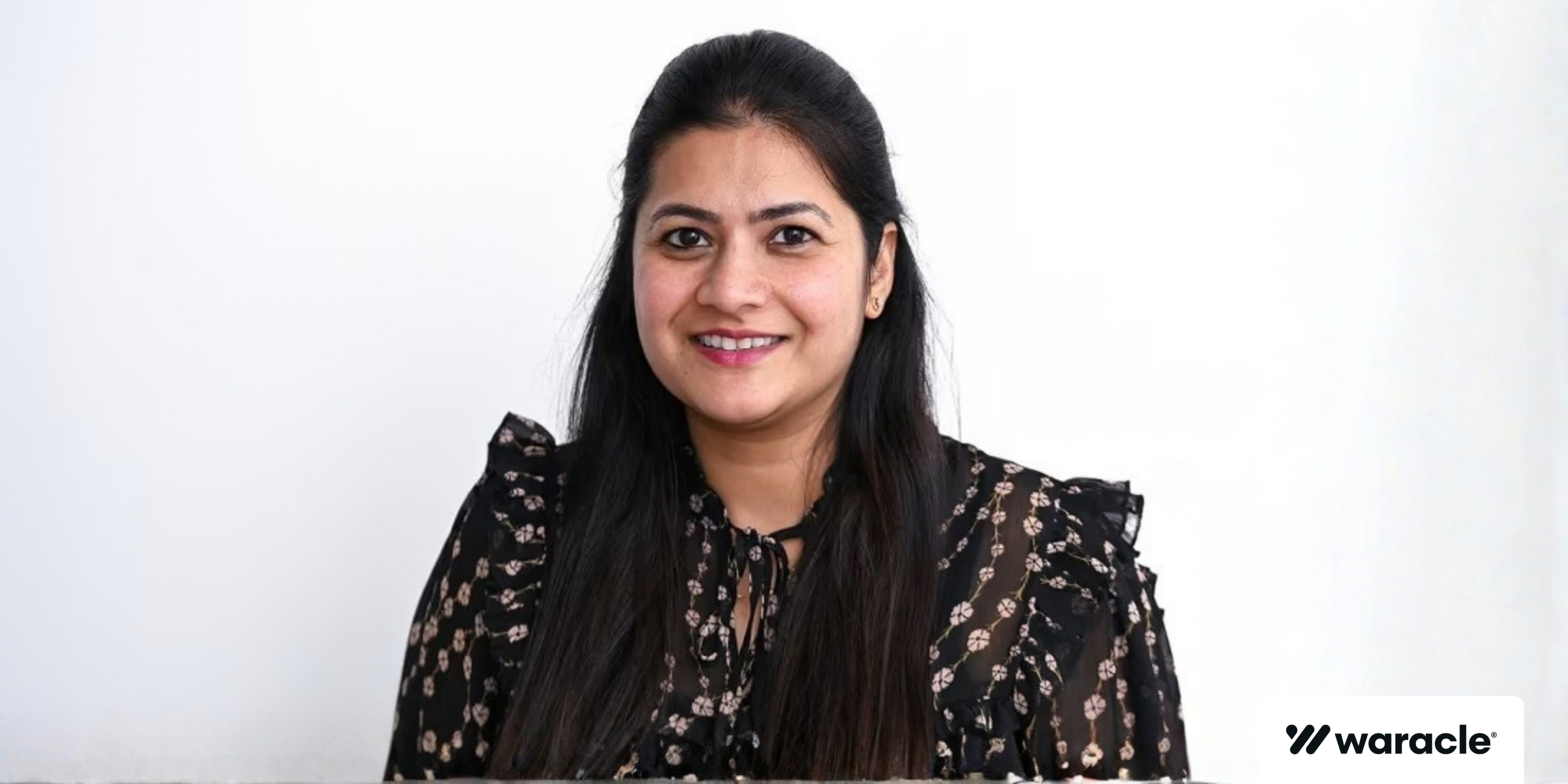
I’m Riddhi, Head of QA at Waracle, and I’ve spent almost a decade and a half working in technology and quality, with the last six and a half years at Waracle.
My career has taken me through different sides of QA from hands-on testing and automation to technical leadership, consulting and now leading our QA practice. That journey has changed the way I think about quality. Earlier in my career, I was naturally focused on finding defects and making sure things worked. Today, I think much more about the bigger picture: are we building the right thing, what risks are we taking, and how can we help teams build quality into what they do from the start?
A big part of what I enjoy now is the combination of technology and people. I still love getting into the technical details and exploring new approaches, but I equally enjoy helping people grow, challenging how we work and creating an environment where QA has a strong voice in the wider delivery conversation.
I’ve always been naturally curious, and I think that’s one of the things that drew me to QA in the first place. I like understanding how things work, questioning assumptions and, occasionally, asking the question nobody else has thought to ask.
What initially attracted me to QA was the investigative side of it. I liked that you couldn’t simply take something at face value, you had to question it, explore it and think about what might happen outside the expected scenario.
There’s something very satisfying about finding a scenario nobody else thought about, particularly when it could have a real impact on the person using the product.
Over time, though, my thinking has shifted from “Can I find the bug?” to “Why did the bug get there in the first place?”
That has been a really important change in my career. Good QA shouldn’t just happen at the end of a delivery cycle. It should influence the whole process understanding the customer problem, challenging requirements, thinking about risk, collaborating with developers and designers, and using automation intelligently.
And now, with AI changing how quickly we can build software, I think that mindset is even more important. We can generate code and tests faster than ever, but human curiosity and critical thinking are still needed to decide what actually matters.

I was drawn to Waracle because of the variety that comes with consultancy. You get to work with different clients, products, technologies and challenges, and that keeps you learning.
Six and a half years later, what I value most is the opportunity to contribute beyond an individual project.
I’ve had the opportunity to grow significantly during my time here, both technically and as a leader. My role has evolved from working directly on projects to helping shape the direction of QA as a practice, and that progression has been incredibly rewarding.
What excites me most now is the transformation happening within QA. We’re moving towards a much broader quality engineering mindset, while AI is also changing how we approach automation, testing and software delivery.
I think there’s a real opportunity for QA to redefine its value here. It’s not simply about testing faster or automating more. It’s about using technology to give us more time and capability to think deeply about risk, customers and quality.
It’s a role with a lot of variety, which is probably what I enjoy most about it.
At a practice level, I help shape the direction of QA at Waracle looking at our technical capabilities, automation strategy, ways of working and how we continue to develop the value QA brings to our clients.
There’s a strong people element too. I work with our QA community and QA leads to create opportunities for people to learn, share knowledge and develop their careers. I’m a big believer that a strong practice isn’t built by one person having all the answers. It comes from creating a community where people can challenge ideas, share experiences and learn from one another.
There’s also a strategic side to the role. Technology is evolving incredibly quickly, particularly with AI, so part of my responsibility is thinking about how QA needs to evolve with it, what skills our people will need, where automation can genuinely add value and how we make sure we’re preparing our teams for what comes next.
And despite the strategic nature of the role, I still like getting into the details. I don’t think leadership should mean losing your technical curiosity. For me, being able to move between strategy, technology and people is what makes the role interesting.
I try not to chase a tool just because it’s new.
There’s always another framework, platform or AI tool appearing, and I think it’s more useful to understand the problem it’s trying to solve before deciding whether it’s worth adopting.
I learn through a combination of industry conversations, technical communities, articles, experimentation and, importantly, the people around me. Our QA community is a great source of knowledge because everyone brings different experiences and perspectives.
I also like getting hands-on. If something genuinely interests me, I’d rather experiment with it or build a small proof of concept than just read about it.
AI is probably the biggest area of exploration for me at the moment. I think it has huge potential in QA, but I’m particularly interested in using it thoughtfully. Faster testing doesn’t automatically mean better testing. The real opportunity is to use AI to enhance our ability to explore, question and identify risk.

A good test isn’t necessarily a complicated test. It’s one that gives you useful information.
I like tests that have a clear purpose: what risk are we exploring, what behaviour are we validating and what would it mean if the test failed?
The strongest QA mindset is often about asking, “What if?”
What if the user does something twice? What if the network disappears? What if the data is unexpected? What if the user does something we never anticipated?
That curiosity is incredibly valuable.
I also think a good test needs to connect back to the customer. We can have thousands of automated tests passing, but if the product is confusing, inaccessible or solving the wrong problem, we haven’t necessarily achieved quality.
For me, testing is ultimately about building confidence, not just proving that something works, but understanding where it might not.
My mornings are fairly simple. I like having a little bit of quiet time before the day properly starts because once the laptop opens, there’s usually no shortage of things competing for attention!
I’ll usually start with a coffee, get myself organised and have a look at what’s ahead for the day.
I try not to immediately disappear into emails and messages. I find it much easier to be intentional about the day if I take a moment to work out what actually needs my attention rather than simply reacting to whatever arrives first.
With a leadership role, I’ve realised that protecting a little thinking time is just as important as protecting meeting time.
At the moment, I’m enjoying anything that gives me a reason to step away from screens and work.
I love spending time with my family and making time for experiences rather than always trying to be productive. Days out, exploring somewhere new, good food and simply having time together are some of my favourite ways to reset.
I also find that some of my best ideas come when I’m not consciously thinking about work. Stepping away from a problem often gives your brain the space to come back to it with a completely different perspective.
I think that’s something QA has taught me that applies far beyond work: sometimes the best way to solve a problem is to stop staring at it for a while.

Be curious before you try to be an expert.
Early in your career, it’s easy to focus heavily on learning tools , automation frameworks, API testing, CI/CD and everything else that comes with the technical side of QA. Those skills are important, but tools will change. The ability to think critically won’t.
Learn how the product works. Understand the customer. Ask questions. Talk to developers, designers and product people. Learn the technical fundamentals. And don’t be afraid to say, “I don’t understand this.” That can be the start of some of the best learning you’ll do.
I’d also encourage people not to define themselves too narrowly as a manual tester or automation tester. QA is a much broader discipline, and there are so many different directions you can take your career.
Most importantly, stay curious.
The strongest QA engineers I know aren’t necessarily the ones who know every tool. They’re the ones who keep asking better questions.